
Acne scars are a common concern that may remain long after active acne has cleared. Even with foundation or concealer, depressed scars and uneven skin texture can still be visible, especially under side lighting.
It is important to understand that not every acne mark is an acne scar. Flat red or brown marks are changes in skin colour after inflammation, whereas atrophic acne scars involve structural damage that causes the skin to become indented.
Because these concerns develop differently, they also require different treatment approaches.
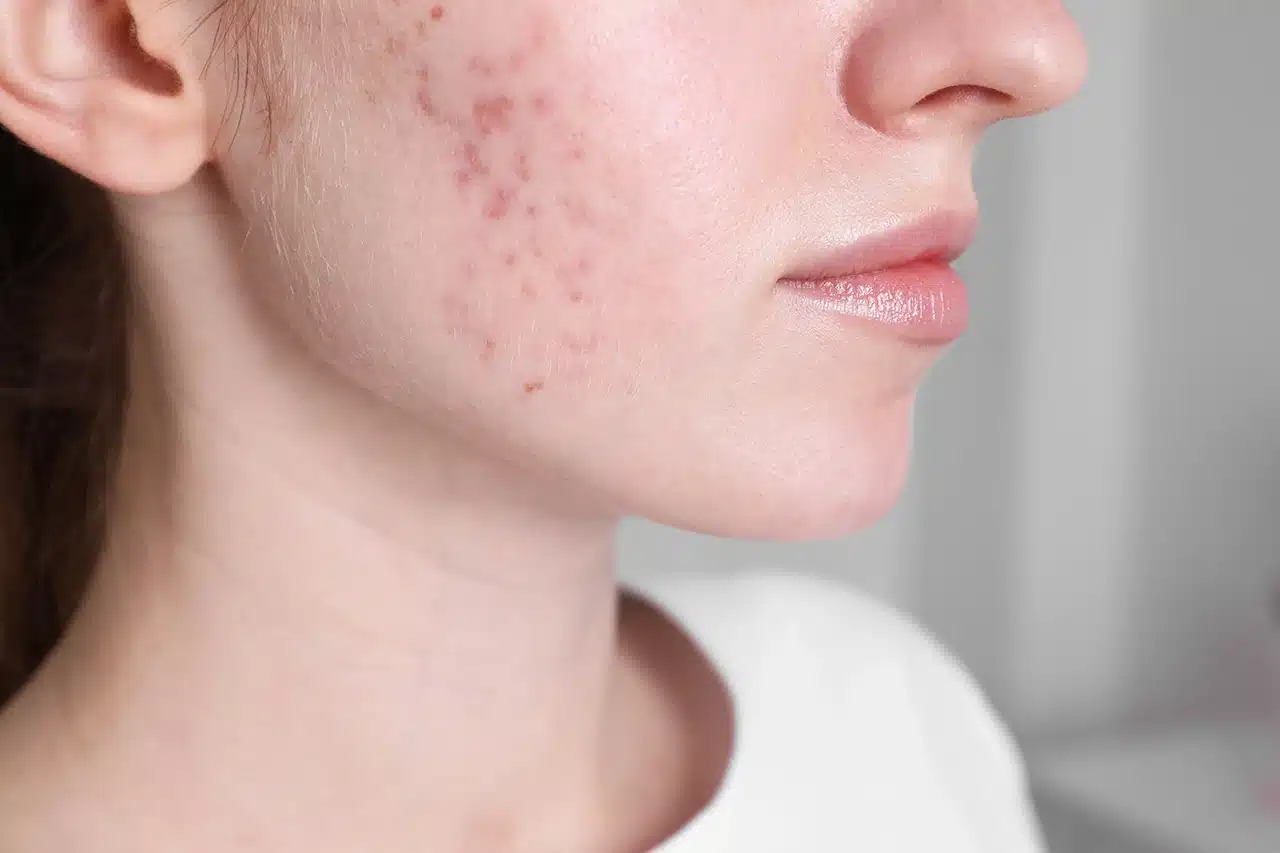
Examples of depressed or atrophic acne scars on the face.
What Are Acne Scars?
Atrophic acne scars are scars that sit below the surrounding skin. They develop when acne inflammation extends into the dermis and damages collagen and other supporting structures.
During the natural wound-healing process, the skin attempts to replace the damaged tissue. When the body cannot produce enough new collagen to replace what has been lost, the affected area may heal with a depression.
Some acne scars are also tethered to deeper tissues by fibrous bands. These bands pull the skin downward, making the scars appear deeper or creating a wave-like texture across the face.
Acne may also cause raised scars or keloids, particularly around the jawline, chest, shoulders, and back. However, this article focuses primarily on depressed acne scars commonly found on the face.
Acne Marks vs Acne Scars: What Is the Difference?
Many people use the term “acne scars” to describe every mark left after acne. Medically, these concerns should be separated because their treatments are different.
- Post-acne redness: Flat pink or red marks without a change in skin texture
- Post-inflammatory hyperpigmentation: Flat brown, grey, or dark marks, particularly common in medium to darker skin tones
- Atrophic acne scars: Depressed, pitted, or uneven areas of skin
- Raised scars or keloids: Scar tissue that grows above the normal level of the skin
Red and dark acne marks may gradually fade over time. Atrophic scars, however, involve a structural change in the skin and often require medical procedures to stimulate collagen, release fibrous bands, or soften the edges of the scars.
What Causes Acne Scars?
The development of acne scars is associated with the severity and duration of inflammation, individual wound-healing responses, genetics, and behaviours such as squeezing or picking acne.
When acne becomes inflamed, the immune system responds to control the inflammation. This process may also damage collagen and surrounding tissue.
If the inflammation is severe or remains active for a long period, the body may not replace the lost collagen completely. The area can then heal as a depressed scar.
The bacterium associated with acne was previously called Propionibacterium acnes or P. acnes. Its current scientific name is Cutibacterium acnes, or C. acnes.
However, acne is not caused by bacteria alone. Several factors are usually involved, including:
- Excess sebum production
- Blocked pores
- Changes in the skin microbiome
- Inflammation and immune responses
- Hormonal and genetic factors
- Irritating or pore-clogging products
Which Types of Acne Are Most Likely to Cause Scars?
Deep and persistent inflammatory acne carries the greatest risk of leaving atrophic scars, particularly:
- Deep inflammatory nodules
- Painful cystic acne beneath the skin
- Multiple pustules or acne recurring in the same area
- Acne that is repeatedly squeezed, picked, or punctured
- Acne that remains untreated and inflamed for a long time
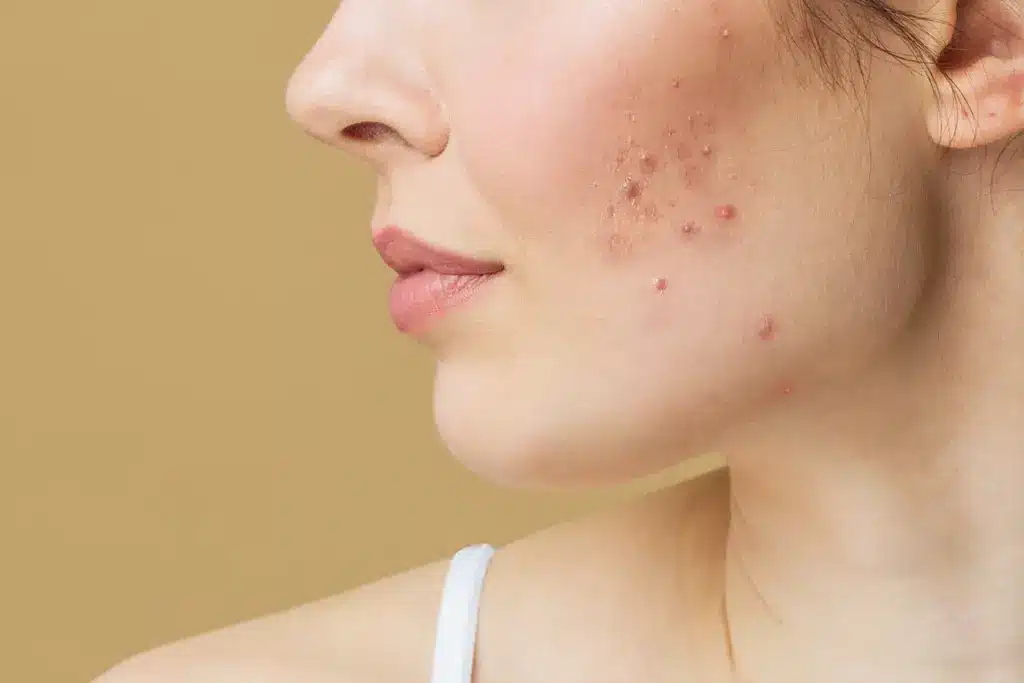
Deep or persistent inflammatory acne has a greater risk of causing permanent scars.
Not every inflamed pimple will develop into a scar. However, some people may scar even after relatively mild acne because of their individual healing response or frequent acne picking.
What Are the Main Types of Acne Scars?
Atrophic acne scars are commonly divided into three main types: ice pick, boxcar, and rolling scars.
A person may have more than one type of scar on the same area of the face. Correctly identifying each scar type is important because no single treatment is suitable for every acne scar.
1. Ice Pick Scars
Ice pick scars are narrow, deep scars with a small opening at the surface. They often look as though the skin has been punctured by a sharp object.
These scars may respond poorly to general resurfacing treatments because the base of the scar extends deep into the skin.
Treatments that may be considered include:
- TCA CROSS
- Punch excision
- Fractional laser or collagen-stimulating treatments after the deeper scar has been addressed
TCA CROSS is not the same as a full-face TCA peel. It involves applying a high concentration of trichloroacetic acid precisely inside each scar.
Because accurate placement and dosage are essential, TCA should not be purchased and applied to acne scars at home.
2. Boxcar Scars
Boxcar scars are round or oval depressions with relatively defined, steep edges. They may be shallow or deep.
Treatment depends on the depth of the scar and how sharply defined its edges are. Options may include:
- Microneedling
- RF microneedling
- Fractional laser
- TCA CROSS for selected scars
- Punch elevation or punch excision for deep, sharply edged scars
Shallow boxcar scars tend to respond better to collagen stimulation and resurfacing. Deep boxcar scars with steep edges may need structural correction before resurfacing treatments are performed.
3. Rolling Scars
Rolling scars are broad depressions with sloping, poorly defined edges. They create a wave-like appearance across the skin.
These scars are often caused by fibrous bands beneath the skin that pull the surface downward.
When the skin is gently stretched from the sides, a rolling scar may appear shallower. This may suggest that tethering is contributing to the depression.
Subcision for acne scars is commonly considered for rolling scars because it helps release the fibrous bands beneath the skin.
After subcision, the doctor may recommend microneedling, RF microneedling, fractional laser, or a filler treatment depending on the scar structure and the patient’s skin.
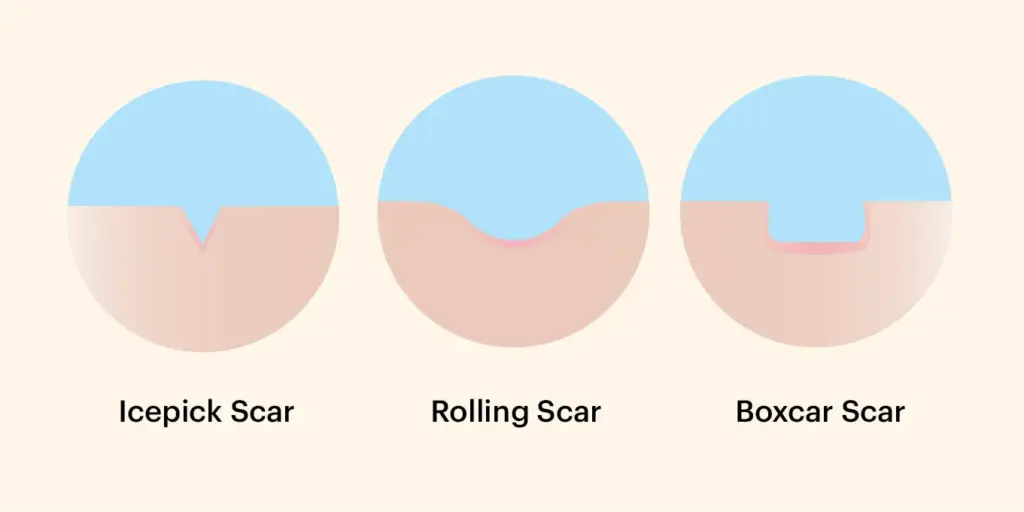
Each type of acne scar has a different structure and may require a different treatment approach.
Current Acne Scar Treatment Options
There is no single treatment that works equally well for every type of acne scar.
Before recommending treatment, the doctor should assess:
- The type of scars
- Scar depth
- The presence of fibrous tethering
- Skin tone
- Risk of post-inflammatory hyperpigmentation
- Acceptable downtime
- Whether active acne is still present
Control Active Acne First
When inflammatory acne is still developing, it should be treated before or alongside acne scar procedures. This reduces the risk of new scars forming while older scars are being treated.
Acne treatment may include topical medications such as retinoids, benzoyl peroxide, or azelaic acid. Oral medications may also be considered for moderate to severe acne.
For severe acne, acne that is actively causing scars, or acne that has not responded to standard treatment, a doctor may consider isotretinoin when medically appropriate.
Microneedling
Microneedling uses fine needles to create controlled microchannels in the skin. This activates the wound-healing response and encourages the production and remodelling of collagen.
Microneedling may be suitable for mild to moderate rolling scars and selected boxcar scars.
Improvements develop gradually as new collagen forms. Multiple sessions are often required, with sufficient time between treatments for the skin to heal.
Deep at-home microneedling is not recommended for acne scar treatment. Incorrect technique may increase the risk of infection, pigmentation, irritation, and additional scarring.
Subcision for Acne Scars
Subcision is a procedure that uses a medical needle or specialised instrument to release fibrous bands beneath the skin.
It is particularly useful for rolling scars and selected boxcar scars that are tethered to deeper tissues.
After the fibrous bands have been released, the doctor may combine subcision with collagen-stimulating treatments or dermal filler to support the depressed area and reduce the chance of the tissues attaching again.
Temporary swelling, bruising, tenderness, or small collections of blood beneath the skin may occur after treatment.
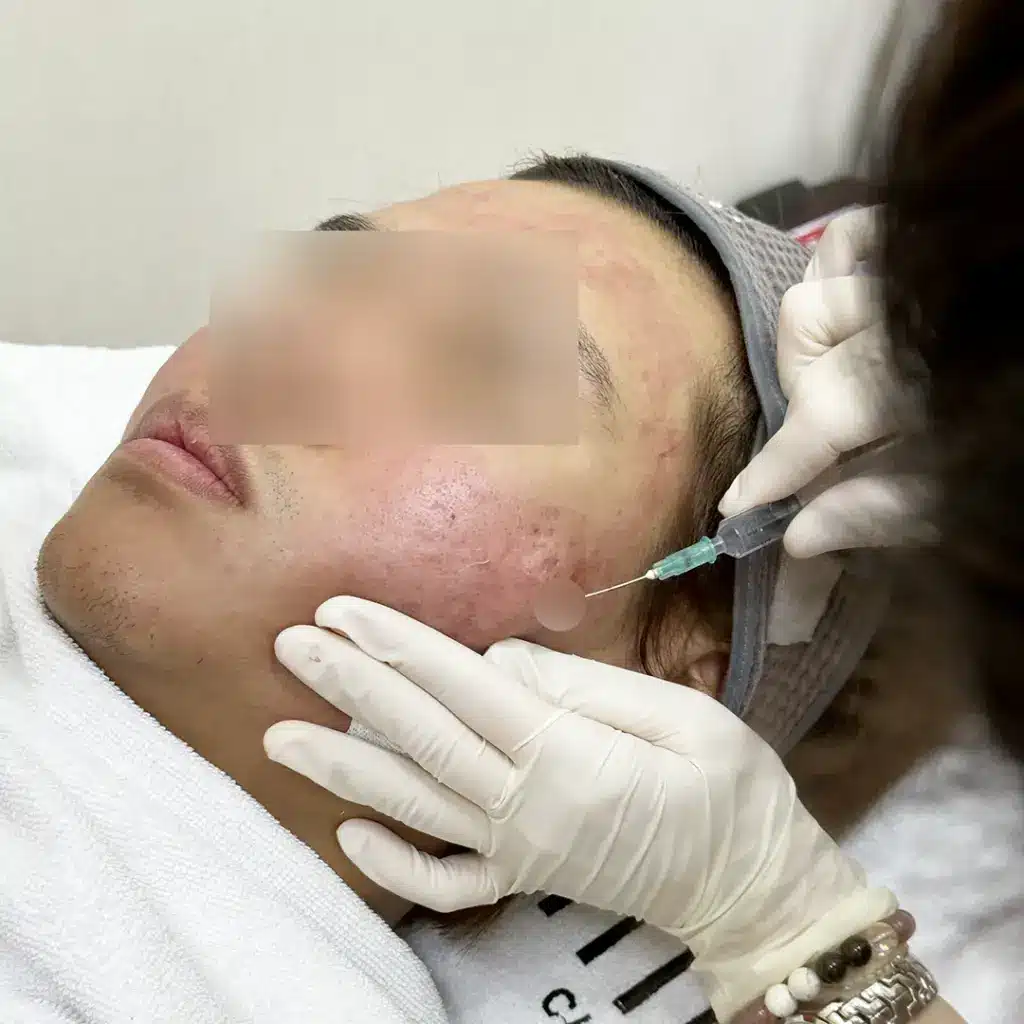
Subcision is commonly used for acne scars caused by fibrous tethering beneath the skin.
RF Microneedling
RF microneedling uses fine needles to deliver radiofrequency energy at controlled depths within the skin.
The energy creates controlled heat in the dermis, encouraging collagen remodelling and improving the appearance of selected acne scars.
Although RF microneedling is sometimes called an “acne scar laser,” it is not technically a laser. It delivers radiofrequency energy through small electrodes rather than using light energy.
Needle depth, energy level, pulse duration, treatment density, and the area being treated must be selected carefully.
Inappropriate settings may increase the risk of burns, prolonged pigmentation, scarring, nerve injury, or changes to the subcutaneous fat layer.
RF microneedling should therefore be performed in a licensed medical clinic by a qualified medical provider who understands facial anatomy and the device being used.
Fractional Laser
Fractional laser creates microscopic treatment zones within the skin. These controlled areas stimulate healing, collagen production, and resurfacing.
Fractional laser may be considered for shallow boxcar scars and selected rolling scars, particularly after tethering has been released.
Different fractional lasers vary in depth, downtime, and risk of post-inflammatory hyperpigmentation.
For Asian skin and patients who develop pigmentation easily, the type of laser, treatment settings, and before-and-after care should be selected carefully.
TCA CROSS
TCA CROSS is commonly used for ice pick scars and selected small boxcar scars.
A high concentration of trichloroacetic acid is applied precisely within each scar. This produces a controlled chemical injury that stimulates healing and collagen formation.
Temporary redness, crusting, and post-inflammatory hyperpigmentation may occur, particularly in darker skin tones or after sun exposure.
TCA should not be applied to scars at home. If the acid spreads beyond the scar or is used incorrectly, it may cause burns, pigmentation, wider scars, or additional scarring.
Punch Excision and Punch Elevation
Punch excision and punch elevation are minor surgical techniques used for selected individual scars.
- Punch excision: The scar is removed with a small surgical instrument. The area is then closed or allowed to heal.
- Punch elevation: The base of a deep boxcar scar is released and raised closer to the level of the surrounding skin.
Once the area has healed, fractional laser or another resurfacing treatment may be used to make the edges appear more blended.
Why Are Combination Treatments Often Needed?
Most patients do not have only one type of acne scar.
For example, the cheeks may contain tethered rolling scars together with boxcar and ice pick scars.
When laser or microneedling is used alone, the fibrous bands beneath rolling scars may continue pulling the skin downward. Meanwhile, subcision cannot adequately treat narrow and deep ice pick scars.
An acne scar treatment plan may therefore involve several stages:
- Control active inflammatory acne
- Release fibrous bands with subcision
- Treat deep individual scars with TCA CROSS or punch techniques
- Improve overall texture with microneedling, RF microneedling, or fractional laser
- Treat redness and pigmentation while preventing new acne
A scar-specific combination approach is often more appropriate than using one device or procedure for every scar on the face.
How to Prepare for Acne Scar Treatment
Before treatment:
- Inform the doctor about medical conditions, medications, and allergies
- Mention any history of keloids or raised scars
- Tell the doctor if you take medication that affects blood clotting
- Avoid squeezing, picking, or extracting acne before treatment
- Avoid intense sun exposure and sunburn
- Stop exfoliating acids and topical retinoids according to the doctor’s instructions
- Postpone treatment if there is an infection, active herpes, or inflamed rash in the treatment area
- Control active inflammatory acne before undergoing procedures that create controlled wounds in the skin
Do not stop medication prescribed by another doctor without medical advice. The treating doctor should review your medication and assess each case individually.
How to Care for Your Skin After Acne Scar Treatment
Aftercare varies depending on the procedure. General recommendations may include:
- Cleanse the skin gently without scrubbing
- Use a suitable moisturiser to reduce dryness and irritation
- Apply sunscreen when the skin is ready
- Avoid strong sunlight and excessive heat
- Avoid AHA, BHA, retinoids, scrubs, and irritating products until the skin has recovered
- Do not pick at scabs, squeeze acne, or scratch the skin
- Avoid swimming, saunas, and strenuous exercise during the initial recovery period
- Follow the specific aftercare instructions provided by the clinic
Contact the clinic if pain or swelling becomes progressively worse, or if you develop pus, blisters, unusual bleeding, or significant changes in skin colour.
The time required before applying makeup differs between procedures. After mild microneedling, makeup may sometimes be applied the following day. TCA CROSS and fractional laser may require a longer wait until the skin has closed and the crusts begin to fall away naturally.
How to Prevent New Acne Scars
Not every acne scar can be prevented, but early and appropriate acne treatment can significantly reduce the risk.
To help prevent new scars:
- Do not allow inflammatory acne to remain untreated
- Avoid squeezing, picking, or puncturing acne
- Use acne medication consistently as directed
- Choose non-comedogenic skincare and makeup
- Cleanse the face gently
- Avoid excessive scrubbing or exfoliation
- See a doctor when acne becomes deep, painful, or begins to leave scars
- Use sunscreen to prevent red and dark acne marks from becoming more noticeable
Controlling acne early is one of the most important steps in reducing the risk of permanent acne scars.
Summary
Acne scars do not all have the same structure, and no single device or procedure is suitable for everyone.
Ice pick scars may respond to TCA CROSS or punch techniques. Tethered rolling scars often require subcision. Boxcar scars and general texture irregularities may improve with microneedling, RF microneedling, fractional laser, or a combination of treatments.
The aim of treatment is to make scars shallower, soften their edges, and improve overall skin texture. Treatment cannot guarantee that acne scars will disappear completely or that the skin will become 100% smooth.
A proper assessment and step-by-step treatment plan help the doctor choose suitable procedures, avoid unnecessary treatments, and reduce the risk of complications.