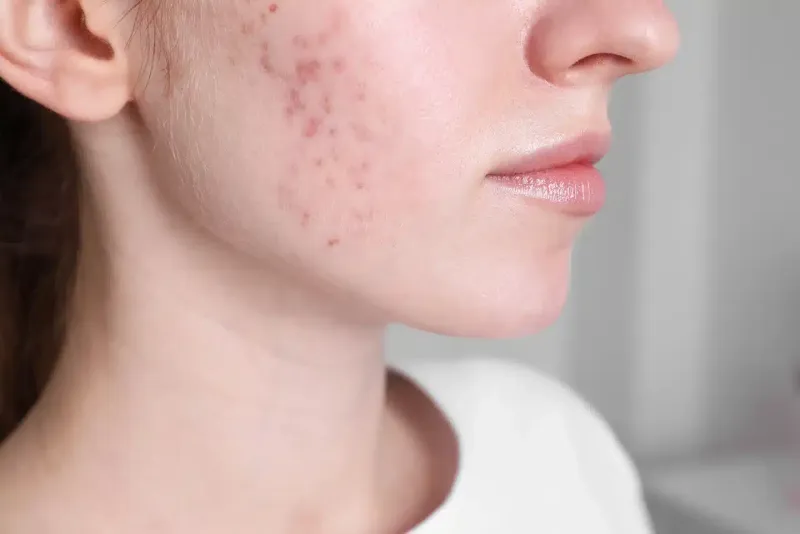

Some acne scars are not caused by collagen loss alone. In many cases, fibrous bands beneath the skin pull the base of the scar downward, creating visible depressions or a rolling, uneven skin texture.
For people looking for acne scar treatment in Bangkok, subcision may be recommended when these fibrous bands prevent the scars from lifting fully. Treatments that mainly resurface the skin or stimulate collagen may provide limited improvement if the underlying tethering has not been released.
Subcision is an acne scar treatment designed to address this underlying problem. A doctor inserts a specialised instrument beneath the skin to release or cut the fibrous bands tethering the scar. This allows the depressed skin to lift while also stimulating the skin’s natural healing process and new collagen formation.
What Is Subcision?
Subcision is a minimally invasive procedure used to treat depressed scars, particularly acne scars that are tethered to deeper tissue by fibrous bands.
During the procedure, a doctor inserts a needle or cannula beneath the base of the acne scar. The instrument is then moved carefully to release the fibrous strands pulling the skin downward.
Once the tethering force has been reduced, the base of the scar can lift more freely. The controlled movement beneath the skin also triggers a natural healing response, which may support the formation of new collagen and connective tissue.
Subcision is most commonly used for rolling acne scars. It may also be suitable for certain boxcar scars, depending on their depth, edges and degree of tethering.
Patients considering subcision in Bangkok should first have their scar types assessed by a doctor, as different acne scars often require different treatment techniques.
Why May Laser Treatment Alone Be Insufficient?
Successful acne scar treatment depends on selecting a method that matches the structure of each scar.
Fractional lasers, RF microneedling and skin-resurfacing treatments can stimulate collagen and improve the surface texture of the skin. However, when the base of an acne scar remains firmly attached to deeper tissue, the skin may not be able to lift fully.
In this situation, a doctor may recommend subcision to release the fibrous bands first, followed by another treatment to stimulate collagen and improve the surrounding skin texture.
Most people have more than one type of acne scar on the same area of the face. For this reason, acne scar treatment often involves a combination of techniques rather than relying on a single procedure.
What Is Cannula Subcision?
Cannula subcision is a technique that uses a small, blunt-tipped instrument called a cannula. This is different from the sharp needles used in some traditional subcision techniques.
The doctor creates a small entry point in the skin and inserts the cannula beneath the area containing acne scars. The cannula is then moved through the appropriate tissue layer to release or separate the fibrous bands beneath the scars.
Potential advantages of cannula subcision include:
- It can reach several acne scars through a limited number of entry points
- It can cover a relatively wide treatment area
- It may be suitable for scars with broadly distributed fibrous tethering
- Its blunt tip may reduce injury to some surrounding tissues compared with a sharp needle
- It can be combined with other acne scar treatments
However, cannula subcision does not mean that bruising or other side effects cannot occur. The doctor must select the appropriate instrument, depth and technique according to each patient’s facial anatomy and scar pattern.
Which Types of Acne Scars Respond to Subcision?
Rolling Scars
Rolling scars have sloping edges and create a wavy or uneven skin texture. When the skin beside the scar is stretched, the depression may temporarily appear shallower.
These scars are commonly associated with fibrous bands pulling the skin downward. Rolling scars are therefore the type most likely to benefit from subcision.
Boxcar Scars
Boxcar scars are round or oval depressions with relatively defined edges. Subcision may help some boxcar scars, especially those with a broad base, moderate depth and visible tethering.
If a boxcar scar has steep edges or little fibrous attachment beneath it, the doctor may recommend another treatment in combination, such as fractional laser, RF microneedling or a focal scar-lifting technique.
Ice Pick Scars
Ice pick scars have a narrow opening but extend deeply into the skin. They generally respond less well to subcision because the main problem is not broad fibrous tethering beneath the scar.
Treatments such as TCA CROSS or punch techniques may be more appropriate, depending on the structure and depth of each scar.
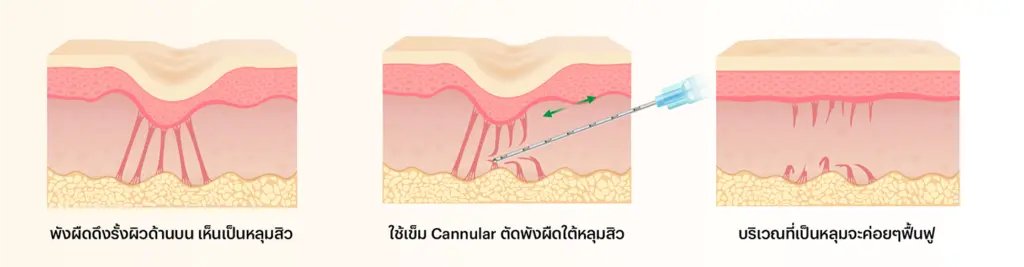
Illustration of cannula subcision used to release fibrous bands beneath acne scars.
Cannula Subcision Procedure
1. Acne Scar Assessment
The doctor evaluates the different scar types, including rolling, boxcar and ice pick scars. The examination also helps identify which areas are tethered by fibrous bands and which treatment is suitable for each scar.
2. Cleansing and Local Anaesthesia
The skin is cleaned before treatment. A topical anaesthetic, local anaesthetic injection or a combination of both may be used to reduce discomfort.
3. Creating an Entry Point
The doctor creates a small opening for the cannula. The number of entry points depends on the treatment area and how the scars are distributed.
4. Releasing the Fibrous Bands
The cannula is moved beneath the skin at an appropriate depth to release the fibrous tissue holding the scars down.
During treatment, some patients may feel pressure, tightness or movement beneath the skin. A releasing sound may also be noticed in some areas.
5. Additional Treatment When Appropriate
Depending on the scar type, skin thickness and treatment goals, the doctor may recommend combining subcision with fillers, collagen-stimulating treatments, PRP or energy-based devices.
The procedure generally takes around 30–60 minutes, depending on the number of scars and the size of the treatment area.
How Many Subcision Sessions Are Needed?
Some acne scars may appear lifted shortly after subcision. However, early improvement may partly result from temporary swelling, so the final outcome should be assessed after the skin has recovered.
Collagen remodelling continues gradually over several weeks or months. The number of sessions required therefore varies from person to person.
Some patients may require approximately one or two sessions. People with extensive scarring, thick fibrous bands or several different scar types may need multiple sessions and a combination of treatments.
Factors that can influence the result include:
- Type of acne scar
- Depth and age of the scars
- Thickness and strength of the fibrous bands
- Number of scars
- Individual collagen production
- Additional treatments used alongside subcision
Subcision can make suitable acne scars appear shallower, but it cannot guarantee that all scars will disappear or that the skin will become completely smooth.
Possible Side Effects of Subcision
After subcision, patients may experience:
- Swelling, redness or tenderness
- Bruising beneath the skin
- Tightness or discomfort when the area is pressed
- Temporary firmness or small lumps during healing
- Small needle marks or entry points
- Temporary post-inflammatory hyperpigmentation in some skin types
Swelling and bruising usually improve gradually. Recovery may take several days or longer, depending on the size of the treatment area, the technique used and the individual response.
Less common risks may include:
- Haematoma or blood accumulation beneath the skin
- Infection
- Persistent lumps
- Irregular skin texture
- Injury to blood vessels or nerves
For this reason, subcision should be performed by a doctor who understands facial anatomy and can select the correct tissue plane and treatment technique.
How to Care for Your Skin After Subcision
After treatment, follow the instructions provided by your doctor. General aftercare may include:
- Apply a cold compress intermittently during the first day if swelling or tenderness occurs
- Avoid pressing, rubbing or massaging the treated area unless instructed by your doctor
- Avoid strenuous exercise, saunas and activities that cause excessive heat or sweating during the initial recovery period
- Use a gentle facial cleanser and moisturiser
- Avoid scrubs, exfoliating acids and retinoids until irritation has resolved
- Apply sunscreen regularly to reduce the risk of post-inflammatory hyperpigmentation
- Inform the doctor about all medicines and supplements before treatment
Do not stop prescribed anticoagulant or antiplatelet medication without consulting the doctor who prescribed it.
Contact the clinic if you experience increasing pain, unusual redness, pus, fever, worsening swelling or a persistent lump.
Who May Be Suitable for Subcision?
Subcision may be considered for people who:
- Have rolling acne scars
- Have certain tethered boxcar scars
- Notice that their scars appear shallower when the surrounding skin is stretched
- Have previously undergone laser or RF treatment but still have firmly tethered scars
- Want to address fibrous bands beneath the skin directly
- Understand that acne scar treatment may require more than one technique
Who Should Delay or Avoid Subcision?
A doctor may recommend postponing treatment for people who:
- Have active inflammatory acne in the treatment area
- Have a skin infection or open wound
- Have an active skin condition in the area
- Have a bleeding or blood-clotting disorder
- Take medication that increases bleeding or bruising
- Have a history of abnormal hypertrophic scars or keloids
- Are pregnant or have a medical condition requiring further assessment
Always inform the doctor about your medical history, current medications, supplements and previous facial treatments before undergoing subcision.
Which Treatments Can Be Combined with Subcision?
A combination approach is often used for acne scars because one person may have fibrous tethering, deep scars, sharply defined edges, enlarged pores and uneven skin texture at the same time.
Subcision with RF Microneedling
RF microneedling delivers radiofrequency energy through small needles into the skin. This helps stimulate collagen production and support structural remodelling.
Subcision releases the fibrous bands beneath the scars, while RF microneedling helps stimulate collagen and improve the surrounding skin texture. The two treatments may therefore complement each other in suitable patients.
Potential benefits include:
- Improving overall skin texture
- Treating scars without significant fibrous tethering
- Reducing the appearance of enlarged pores
- Supporting collagen remodelling across the treatment area
The treatments may be performed during the same appointment or on separate dates. The appropriate timing depends on the technique used, scar severity, degree of bruising and the doctor’s assessment.
Subcision with Dermal Filler
Dermal filler may be used to support the base of selected scars after the fibrous bands have been released. It may be considered when acne scars are accompanied by localised volume loss.
The doctor must carefully evaluate the treatment area, filler type and vascular anatomy before recommending this combination.
Subcision with Fractional Laser
After the fibrous bands have been released, fractional laser treatment may help soften scar edges, improve the skin surface and stimulate further collagen formation.
This combination may be suitable for patients who have both rolling and boxcar scars.
Subcision with TCA CROSS
Patients with both rolling scars and ice pick scars may require subcision in areas with fibrous tethering and TCA CROSS for individual narrow, deep scars.
Subcision in Bangkok at Skinity Clinic
For patients looking for subcision or acne scar treatment in Bangkok, Skinity Clinic provides individual scar assessment before treatment.
The subcision programme for acne scars at Skinity Clinic is priced at THB 3,990 per treatment area.
The number and size of treatment areas depend on:
- Number of acne scars
- Size of the affected area
- Depth of the scars
- Thickness and distribution of the fibrous bands
- Additional treatment techniques recommended by the doctor
A doctor will assess the acne scar types and create an individual treatment plan before every procedure, as different scars may require different methods.
Receive promotions via LINE | Contact us for more information
How Does Subcision Improve Acne Scars?
Subcision is an acne scar treatment that directly addresses fibrous tethering beneath the skin. It is most suitable for rolling scars and certain tethered boxcar scars.
The procedure releases or cuts the fibrous bands pulling the base of the scar downward. It also stimulates the skin’s natural healing process and collagen production.
However, most patients have more than one type of acne scar. An effective treatment plan may therefore combine subcision with RF microneedling, fractional laser, dermal filler or TCA CROSS, depending on the doctor’s assessment.
Patients searching for acne scar treatment in Bangkok should choose a treatment plan based on scar type rather than selecting a procedure solely by price or popularity.
The goal is not to remove every acne scar in a single session. Treatment aims to gradually improve the skin structure, reduce scar depth and create a smoother overall skin texture based on each patient’s individual condition.